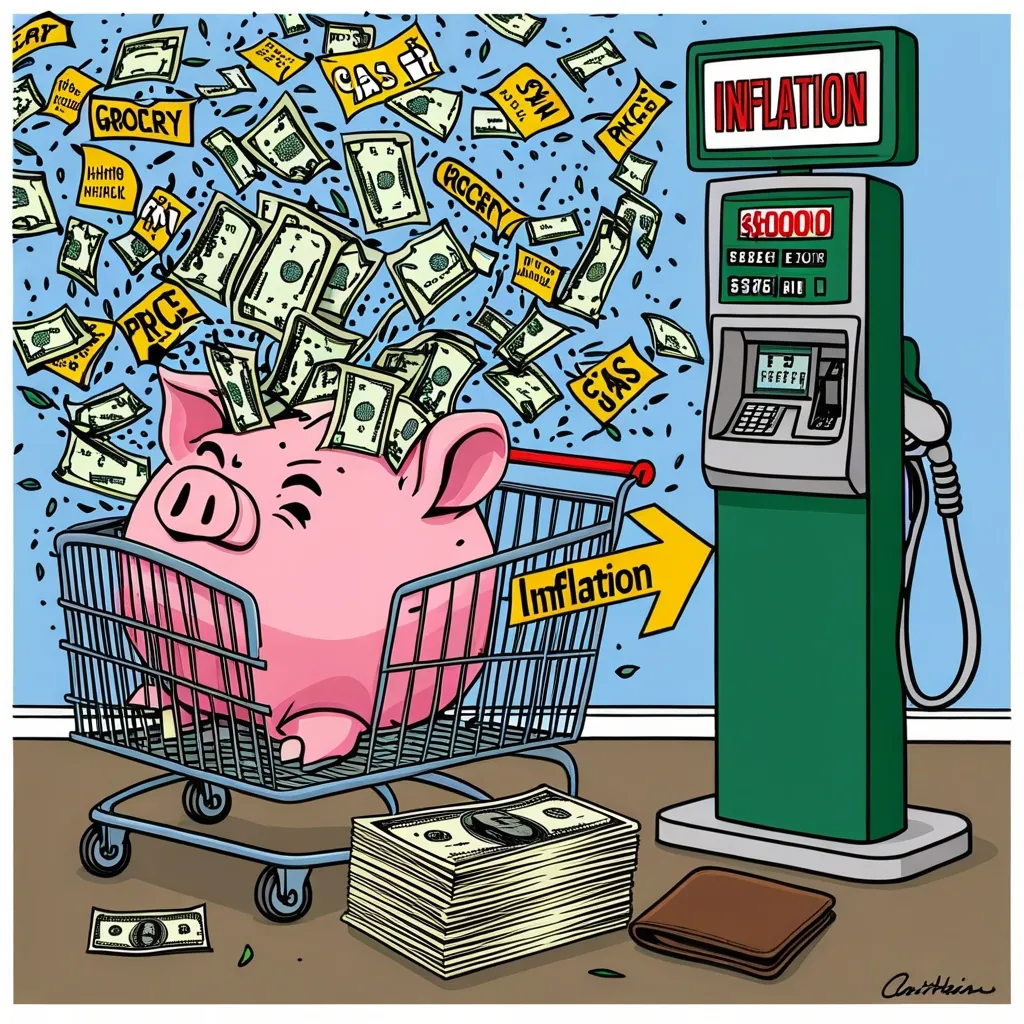
Let’s chat a bit about inflation, that sneaky little culprit that can really mess with your savings if you’re not paying attention. Imagine tucking away £1,000 in a savings account, feeling great about your smart decision, only to find out that a year later, that same amount doesn’t stretch as far as it used to. That’s inflation doing its dirty work.
Understanding Inflation
Inflation is essentially when the prices of stuff you regularly buy - like groceries, gas, or gadgets - start creeping up. Think about it: what if that grocery bill that used to be manageable now makes you wince every time you check out? Or, filling up your car is suddenly a bigger dent in your wallet? Yep, that’s inflation.
Take the UK, for example. Inflation jumped by 4.2% over 12 months leading to January 2024. In plain terms, if something cost £1 a year earlier, it could very well cost £1.04 now. It might not seem like a lot at first, but these little increases add up over time, reducing the buying power of your money.
Impact on Your Hard-Earned Cash
When inflation hikes up, the value of your money takes a hit. Let’s break this down with a simple scenario. If you parked £1,000 in an easy-access savings account earning a 4% interest rate, by year’s end, you’d be looking at £1,040. Not bad, right? But hold on a second. If inflation is at 6%, something that cost £1,000 now costs £1,060 in a year. Essentially, your £1,040 ain’t cutting it, so you’re £20 short in real terms - not cool.
This highlights a significant snag: if the interest you’re earning on a savings account doesn’t outpace inflation, you’re losing money in the long run. This makes saving feel like you’re on a treadmill - working hard but not getting anywhere.
Causes of Inflation
So why does this inflation thing happen? It’s a mix of different factors. Increased demand for goods and services often pushes prices up. Add in global hiccups like natural disasters or political drama messing up supply chains, and suddenly the prices for everyday commodities like oil and gas start to rise too. When everyone’s clamoring for the same stuff, sellers bump up their prices.
How to Measure Inflation
We rely on the Consumer Price Index (CPI) to keep track of inflation. This index monitors the cost of a batch of consumer goods and services, from transport to healthcare to housing. It’s updated monthly and gives us a snapshot of how prices are shifting over time.
Long-Term Goals vs. Inflation
Inflation doesn’t just affect today’s expenses. It can mess with your long-term savings goals too. Imagine putting aside ₹ 15,00,000 (around £15,000) for your kid’s education. Fast forward ten years, inflation might mean that the money you saved is worth a lot less, forcing you to save even more to hit your targets.
Staying Ahead of Inflation
So, what can we do to fend off inflation’s impact? Here are a few strategies to consider:
-
Investing for the Long Haul: Popping your money into investments like funds, shares, or bonds can offer growth that outpaces inflation. While there’s no guarantee, typically, sticking with investments for at least five years gives your money a chance to bounce back from short-term market wobbles.
-
Diversify to Adapt: Spreading your money across different types of assets - like stocks, real estate, and others - can help balance the risks and rewards. This approach shields you somewhat from market swings and keeps the value of your savings more stable.
-
Inflation-Indexed Investments: Looking at options like Treasury Inflation-Protected Securities (TIPS) or government I bonds is smart. These adjust based on inflation rates, keeping your purchasing power in check.
-
Emergency Funds Rule: Building an emergency fund with three to six months’ worth of expenses in a readily accessible account is key. This safety net ensures you won’t need to tap into investments, which can be volatile during inflationary periods.
-
Financial Tune-Ups: Regularly reviewing your finances and tweaking your budget helps you stay on top of rising costs. Adjusting your financial goals to match the economic climate can keep you ahead of the curve.
Some Real-Life Scenarios
Let’s flesh this out with some practical examples:
-
Savings Account: Let’s say you’ve got $100 sitting in a savings account that earns a 1% interest rate. After a year, this grows to $101. But if inflation is at 2%, you actually need $102 to maintain the same buying power. So that’s a net loss in real terms despite the interest earned.
-
Long-Term Savings: Imagine saving ₹ 1 lakh (around £1,000) with an annual inflation rate of 6%. Ten years down the road, that money’s value could drop dramatically. ₹ 1 lakh today might only be worth around ₹ 57,299 in a decade, and around ₹ 30,862 after twenty years, thanks to the cumulative effect of inflation. Scary, right?
In the End
Inflation is something we’re stuck dealing with, but understanding how it operates and taking steps to mitigate its impact can help. By investing wisely over the long term, diversifying, considering inflation-indexed securities, having an emergency fund, and frequently reviewing your finances, you can keep your money from losing too much value over time.
It’s all about being proactive. With some smart moves, you can keep inflation from derailing your financial plans. Embrace the challenge, stay informed, and you’ll be set to navigate through inflation’s tricky waters.