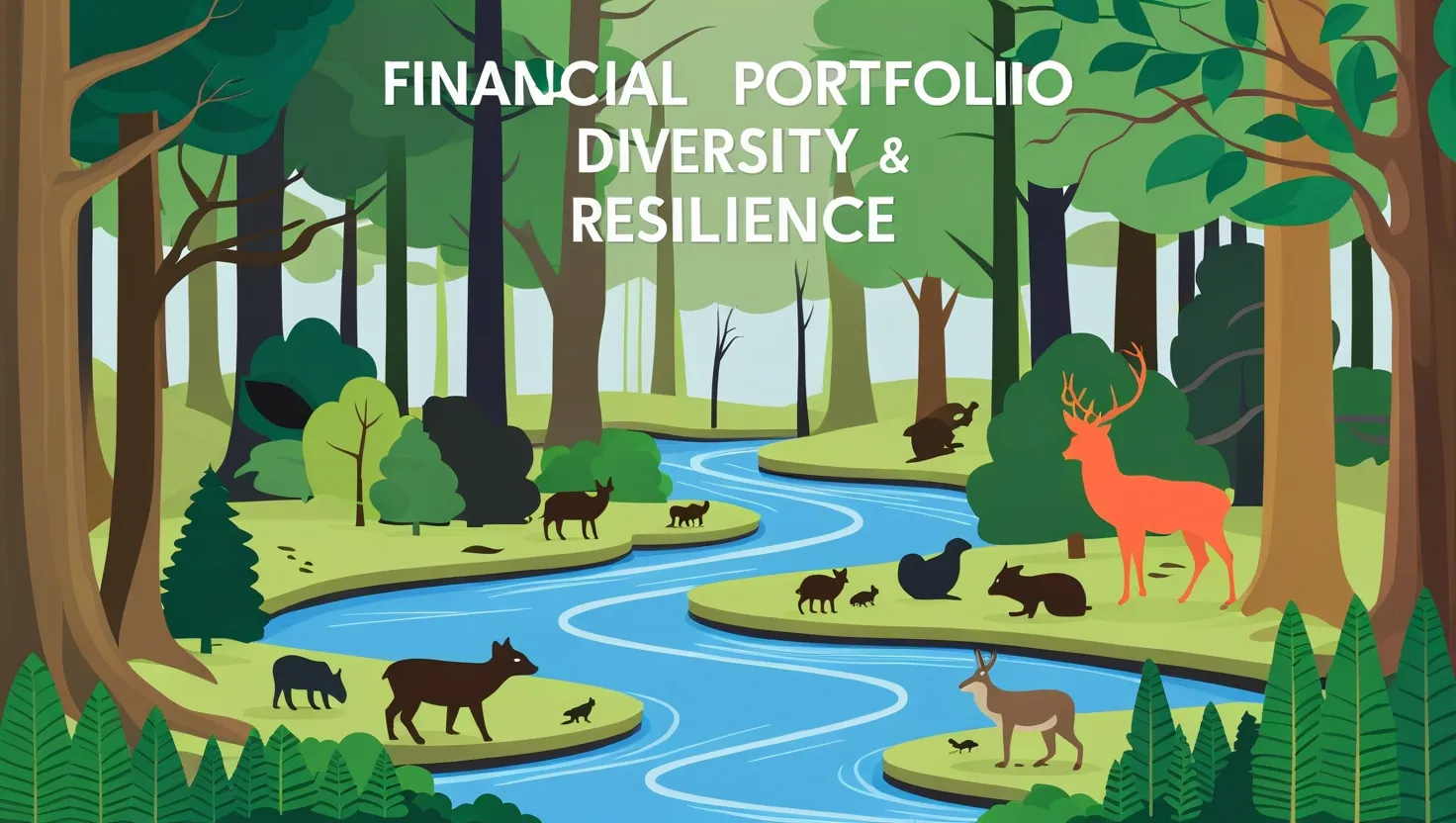
Imagine a world where managing financial risk is inspired by the resilient defense mechanisms found in nature. This approach, often termed biomimetic risk hedging, involves studying and replicating the strategies that organisms and ecosystems use to survive and adapt, and applying these principles to your investment portfolio.
When you think about it, nature is full of intricate systems that have evolved over millions of years to protect against various threats. For instance, coral reefs are not just collections of individual organisms; they are complex ecosystems where different species play symbiotic roles, each contributing to the overall health and resilience of the reef. This concept can be applied to your investment portfolio by diversifying your assets in a way that mimics this symbiotic relationship.
Consider structuring your portfolio like a coral reef, where each asset class serves a specific purpose. Just as coral provides a habitat for fish, which in turn help keep the coral healthy by controlling algae growth, your portfolio can include a mix of assets that support each other. For example, you might balance high-risk, high-reward investments like stocks with more stable, income-generating assets like bonds or real estate. This balance ensures that when one part of your portfolio is under stress, other parts can help stabilize it.
Another strategy inspired by nature is the concept of hibernation. During market downturns, or what we might call “market winters,” adopting a hibernation-like approach can be beneficial. This involves conserving resources and energy, much like bears do during the winter months. In financial terms, this could mean reducing exposure to volatile markets, holding more cash, or investing in assets that are less correlated with the overall market. This approach allows you to weather the storm without depleting your resources, ready to emerge stronger when conditions improve.
Tail risk hedging, a strategy that involves protecting against extreme and unlikely events, can also be seen through a biomimetic lens. In nature, some organisms have evolved to survive rare but catastrophic events, such as floods or wildfires. Similarly, in finance, you can use derivatives like put options to hedge against significant market corrections. These instruments act as insurance policies, providing protection during times of extreme market stress, even though they may cost money and underperform during normal market conditions.
The timing of these hedging strategies is crucial, much like the timing of a bird’s migration or a squirrel’s food storage. You need to identify when the risk is high and the market is vulnerable to significant corrections. This might involve monitoring market valuations and volatility levels. When valuations are high and volatility is increasing, it may be the right time to implement your hedging strategies, just as a skilled card counter in blackjack sizes their bets according to the odds of winning based on the remaining cards in the deck.
Diversification, a traditional risk management strategy, can also be enhanced by biomimetic principles. In nature, diversity within an ecosystem is key to its resilience. A forest with a variety of tree species is more likely to survive a disease outbreak than a forest with only one type of tree. Similarly, a diversified portfolio with a mix of asset classes, sectors, and geographic regions can better withstand market turbulence.
The concept of “fat-tailed” distributions in finance, where extreme events are more frequent than predicted by standard statistical models, is another area where nature’s resilience can offer insights. Financial markets, like natural systems, are prone to rare but significant events. By recognizing this and preparing for such events through tail risk hedging, you can mitigate the impact of these “black swan” events on your portfolio.
In addition, the dynamic allocation of funds between different strategies, much like how animals adapt their behaviors in response to changing environments, can be highly effective. This involves continuously monitoring market conditions and adjusting your hedging strategies accordingly. For example, if yield curves are steep, you might exploit term structures in rates markets to hedge your risk, similar to how a bird might adjust its migration route based on changing weather patterns.
The cost of hedging is another important consideration, much like the energy expenditure of an animal’s defense mechanisms. While hedging can provide significant protection, it is not free. The cost of options and other derivatives can be high, especially during times of high market stress. However, by being opportunistic and only hedging when risk is high, you can reduce the overall cost of insurance and make your hedging strategies more cost-effective.
Rebalancing your portfolio regularly, similar to how ecosystems naturally rebalance themselves, is also crucial. This involves periodically adjusting the allocation of your assets to ensure that your portfolio remains aligned with your risk tolerance and investment goals. By doing this in tranches, or smaller increments, you can smooth out the timing luck associated with rebalancing, much like how a river’s flow is smoothed out by its natural meanders.
In conclusion, biomimetic risk hedging is not just about mimicking nature’s strategies; it’s about creating a living, breathing investment ecosystem that adapts and evolves with changing market conditions. By studying and replicating the resilience and adaptability of natural systems, you can develop a more dynamic and effective approach to risk management. This approach transforms risk hedging from a defensive measure into an organic, adaptive process that helps your portfolio not just survive but thrive amidst financial uncertainties, much like nature’s most resilient species.