Irregular expenses don’t sneak up on you because you’re careless. They catch you because most budgeting advice is built around monthly bills, and life simply doesn’t work that way. Your car doesn’t care that it’s not in your budget when the transmission goes. Your dentist doesn’t offer a discount for bad timing. These costs exist on their own schedule, and if your financial system isn’t built to match that reality, you’ll always feel one surprise away from panic.
That’s exactly what a sinking fund fixes. And no, it’s not a complicated investing strategy or a fancy financial product. It’s just money you set aside slowly, on purpose, so it’s ready when you need it.
“A budget is telling your money where to go instead of wondering where it went.” — Dave Ramsey
Let’s start with the part most people skip entirely.
You have to know what you’re actually dealing with.
Pull up your bank statements and credit card history from the last twelve months. Not just a quick glance — go line by line. What you’re looking for are every expense that didn’t show up every single month. Car registration. Annual insurance premiums. The dentist visit you keep putting off. Holiday gifts. A professional subscription. A vet bill. These are the costs that feel random but are actually very predictable once you write them all down.
Most households, when they do this exercise honestly, find between $3,000 and $8,000 in non-monthly spending that was never included in their monthly budget. That number isn’t the problem. The problem is that it was invisible. A cost you can see is a cost you can plan for.
Write each item down. Estimate its cost. Note the month it’s usually due. That list is your starting point — and it’s probably more honest than any budget you’ve built before.
Now, turn each of those annual costs into a tiny monthly number.
This is where the whole system clicks into place. Take each expense and divide it by how many months you have until it’s due. A $1,200 car insurance premium due in ten months? That’s $120 a month. A $600 holiday budget? Spread that over nine months and you’re putting away $67 a month. Easy.
For unpredictable things like car repairs or medical costs, look at what you’ve actually spent over the past two or three years, average it out, and divide by twelve. You won’t be exactly right every time, but you’ll be close enough to stop being blindsided.
Add up all those monthly amounts. That total — maybe $300, maybe $500 — is what you need to move into your sinking funds every single month. It sounds like a lot until you realize you were already spending it. You were just doing it on credit, with interest on top.
“The secret to getting ahead is getting started.” — Mark Twain
Here’s where most people go wrong: they throw it all into one savings account.
One pile of money with one vague label like “savings” is almost guaranteed to get misused. You see a balance, it feels like slack, and then something comes up that seems important enough to justify dipping in. Three months later, you’re short when the real expense arrives.
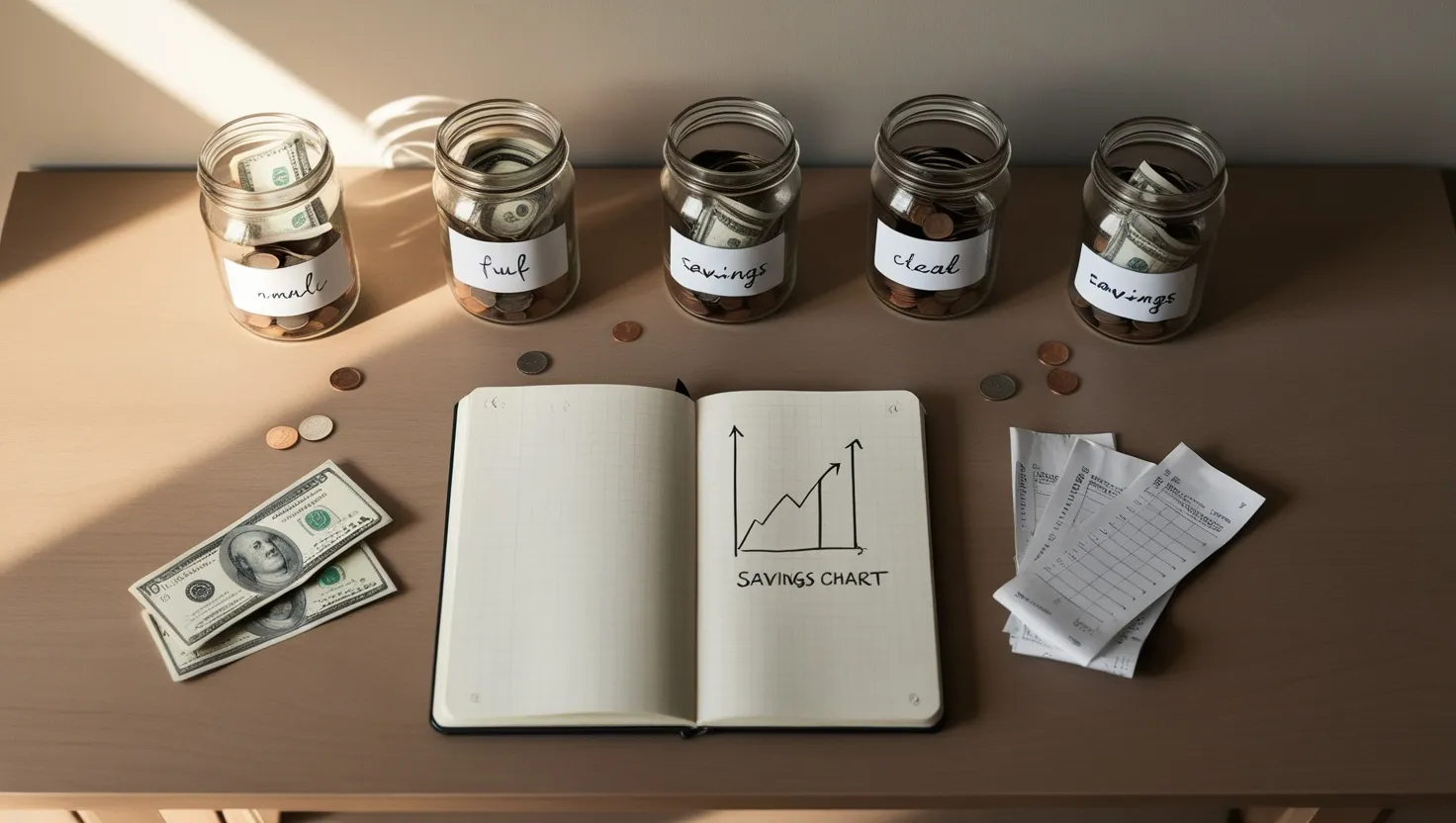
The fix is embarrassingly simple. Open separate accounts — or sub-accounts — for each major category. One for your car. One for medical costs. One for annual bills. One for home maintenance. One for gifts and travel. Label them clearly.
Most online banks make this easy. Some let you create multiple savings buckets inside a single account with custom names and individual balances. When you log in and see “Car Fund: $480” and “Medical Fund: $220,” you’re looking at real information. You know exactly what’s available and what it’s for.
Small or rare expenses that don’t warrant their own account can share a single miscellaneous bucket. The goal isn’t perfection — it’s clarity.
Do you automate your bills? Apply the same logic to your sinking funds.
Set up automatic transfers from your checking account to each sinking fund on the day after your paycheck lands. Not a few days later. Not when you remember. The day after payday — before the money starts disappearing into food, impulse buys, and forgotten subscriptions.
Treat these transfers exactly like rent or a utility bill. Non-negotiable. If you’re paid biweekly, split your monthly target in half and schedule two transfers. The mechanics don’t matter as much as the consistency.
The real power of automation isn’t that it saves you time. It’s that it removes the decision entirely. You don’t have to feel motivated. You don’t have to remember. The system works on its own, which means it works even during the months when life is chaotic and budgeting is the last thing on your mind.
“Do not save what is left after spending, but spend what is left after saving.” — Warren Buffett
One rule that holds the whole thing together: one fund, one purpose.
When a car expense comes up, you pay it from the car fund. When a medical bill arrives, you use the medical fund. You don’t borrow from the travel fund to cover the dentist. You don’t raid the home maintenance fund for holiday gifts.
If a fund runs short before the expense is due, you have two clean options. Delay the expense if that’s realistic, or temporarily borrow from your emergency fund with a real plan to pay it back through future sinking fund contributions. What you don’t do is mix categories, because that quickly turns a clear system into the same muddy pile you started with.
Every quarter, sit down and check each fund. Did you overspend somewhere? Did an expected cost come in higher than planned? Adjust the monthly contribution amount for the next quarter. This doesn’t have to be a long meeting with yourself — thirty minutes a few times a year is enough to keep the system accurate.
Here’s the shift that actually changes things.
Without sinking funds, a $900 car repair is an emergency. With them, it’s a Tuesday. The expense is identical. The experience is completely different. You’re not scrambling to move money around or deciding which bill to delay while you wait for the credit card balance to come down. You just pay it, replenish the fund over the next few months, and move on.
That’s not a small thing. Financial stress doesn’t usually come from having too little money. It often comes from having unpredictable money — from never knowing when the next hit is coming or how bad it’ll be. Sinking funds don’t increase your income. But they make your financial life feel much more stable, because you’ve converted a series of irregular shocks into steady, predictable flows.
“Wealth is not about having a lot of money; it’s about having a lot of options.” — Chris Rock
There’s also a less obvious benefit worth mentioning. When you start funding these categories consistently, you naturally start getting better estimates. You notice that your car costs you about $800 a year in maintenance. You realize your holiday spending has crept up. You start making deliberate choices about those numbers instead of just reacting to whatever shows up.
That awareness is worth more than any single financial tactic. It turns you from someone things happen to into someone who actually decides where the money goes.
Start with the list. Make it complete and honest. Then do the math, open the accounts, automate the transfers, and stick to the one-fund rule. The system isn’t complicated. The reason most people don’t have it isn’t that they lack the knowledge — it’s that they keep waiting for the perfect time to start.
There isn’t one. The best moment was twelve months ago, before last year’s irregular expenses caught you off guard. The second-best moment is right now, before the next one does.