The Hidden Costs of Income Inequality: A Drag on Economic Growth
We often hear about economic growth in terms of GDP and stock market performance, but there’s a crucial factor that doesn’t always make the headlines: income inequality. It’s not just about fairness - the growing gap between the rich and poor has some serious consequences for our economy as a whole.
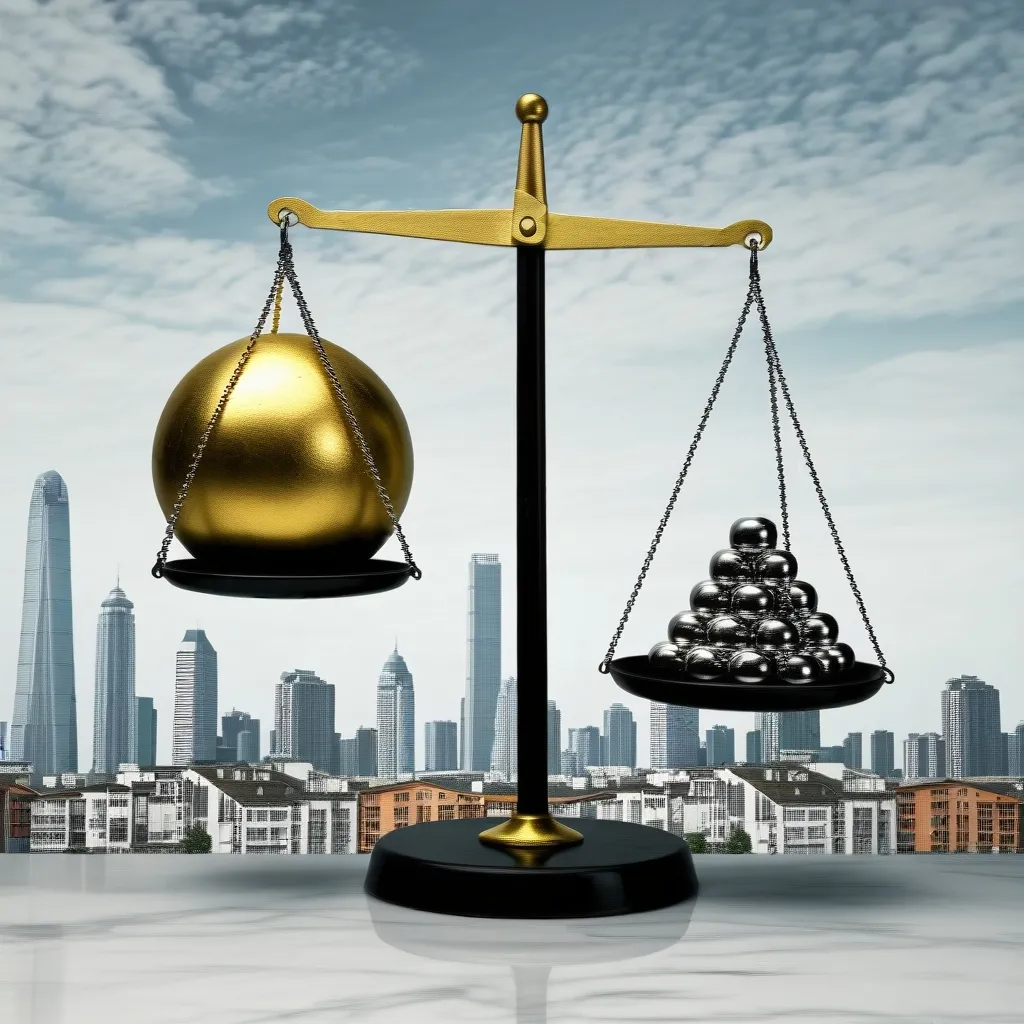
Think about it like this: imagine you’re at a party where one person has a massive cake, and everyone else is fighting over crumbs. That’s kind of what’s happening in many countries right now. In the US, for example, the bottom half of earners have only seen their income grow by about 20% since 1980. Meanwhile, the top 10% are living it up with a whopping 145% increase. Yikes!
This imbalance isn’t just unfair - it’s actually hurting our economic growth in some sneaky ways. Let’s break it down.
First up, there’s the impact on overall spending. When a small group of people have most of the money, they tend to save more and spend less (I mean, how many yachts can one person buy?). On the flip side, folks with lower incomes spend a bigger chunk of their money on basics like food and housing. So when we shift more money to the wealthy, it actually reduces the total amount of spending in the economy. Some experts reckon this inequality has knocked about 1.5% off our GDP growth each year in the US. That’s a lot of missed economic activity!
But it’s not just about spending. Income inequality also messes with our talent pool. When kids from lower-income families can’t access good education, we’re missing out on a ton of potential. Bright minds that could be inventing the next big thing or curing diseases are instead stuck in a cycle of limited opportunities. It’s like we’re leaving money on the table as a society.
Then there’s the tax situation. Wealthy individuals and big corporations often use fancy strategies to avoid paying their fair share. This means governments miss out on a ton of money that could be used for public services, infrastructure, and programs that benefit everyone. In poorer countries, this is especially brutal - corporate tax dodging costs them around $100 billion every year. Just think how many schools could be built or lives saved with that cash!
Income inequality can also lead to some serious instability. When people feel left behind, it can spark social unrest and put pressure on wages, which can fuel inflation. It’s like a economic game of Jenga - pull out too many blocks from the bottom, and the whole thing might come crashing down.
It even affects our political system. Research shows that states with higher inequality tend to have more polarized legislatures. This can lead to gridlock and make it harder to pass policies that actually help people. Plus, when people feel the system is rigged against them, it can breed distrust and anti-capitalist sentiment. Not exactly a recipe for a thriving economy!
The labor market takes a hit too. Since the late 1970s, workers have been losing bargaining power. This means slower wage growth and bigger income gaps. When people aren’t earning more, they can’t spend more, and the whole economy suffers.
Even local economies and housing markets feel the squeeze. In the US, states with higher incomes end up contributing more to federal revenue, while lower-income states rely more on federal support. This affects everything from housing prices to job opportunities across different regions.
So what can we do about all this? Well, there are a few ideas on the table:
Progressive taxation is a big one. This means making sure the wealthy pay their fair share, which can then fund social programs and education. It’s about evening the playing field a bit.
We also need to reform the labor market to give workers more bargaining power. This could help boost wage growth and narrow those income gaps.
Promoting inclusive economic growth is crucial too. This means policies that encourage entrepreneurship and education, especially for lower-income families. We need to make sure talent isn’t wasted just because someone can’t afford college.
Tackling student debt is another important piece of the puzzle. When young people start their careers saddled with massive loans, it holds back their ability to participate fully in the economy.
We should also be looking at ways to strengthen social safety nets. This can help reduce the impact of income shocks and give people a better foundation to build from.
Investing in early childhood education is a smart move too. It can help level the playing field from the start and give all kids a better shot at success.
Finally, we need to address the digital divide. In today’s world, access to technology and the internet is crucial for education and job opportunities. Making sure everyone has this access can help reduce inequality in the long run.
The bottom line is this: income inequality isn’t just unfair, it’s a drag on our entire economy. It reduces spending, wastes talent, creates instability, and even messes with our political system. By addressing this issue, we’re not just helping those at the bottom - we’re creating a stronger, more dynamic economy for everyone.
It’s a complex problem, and there’s no quick fix. But by understanding how income inequality affects our economy and taking steps to address it, we can work towards a future where economic growth truly benefits everyone. After all, a rising tide should lift all boats, not just the luxury yachts.