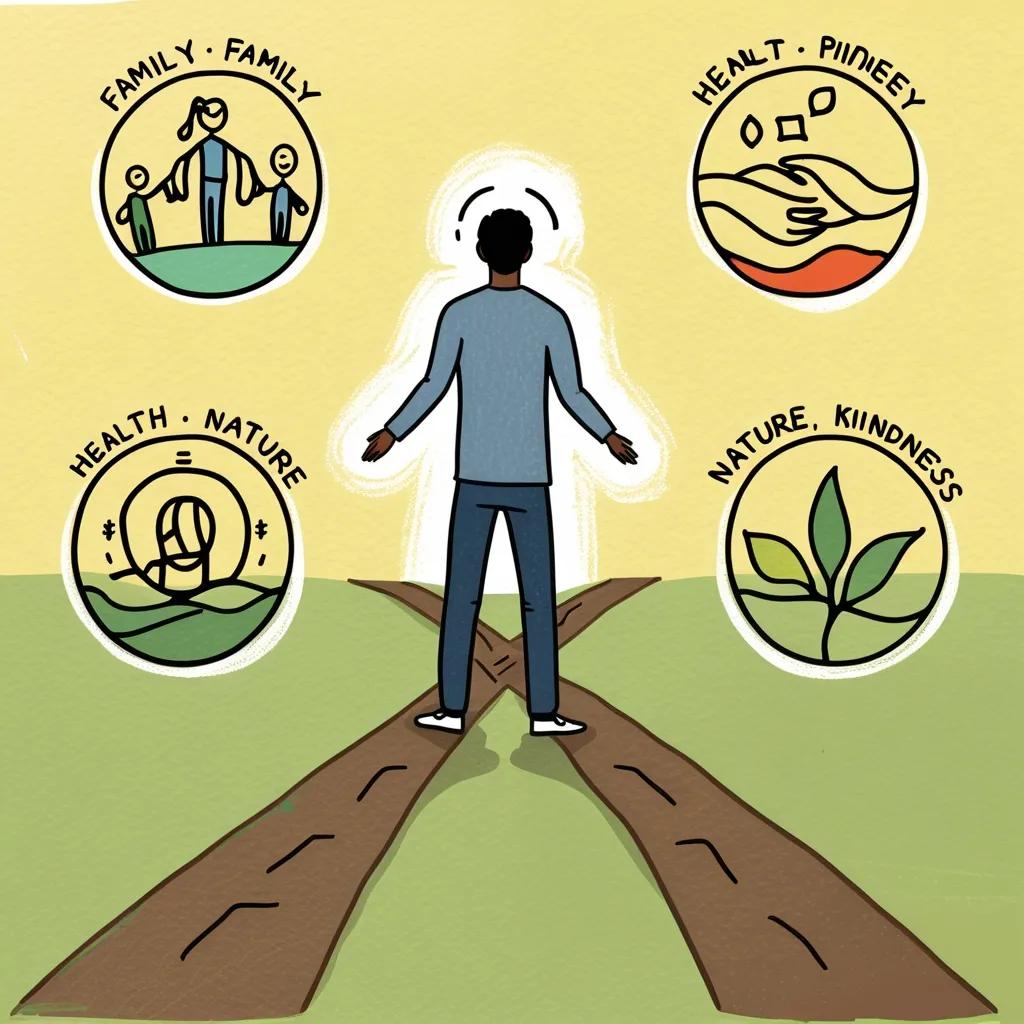
You know how some days, you sit down to work and five minutes later you’re scrolling through your phone, wondering where the time went? Or you want to read a book, but somehow end up watching videos instead? It’s not always about willpower. A lot of the time, it’s about the space around you. Your environment is quietly whispering instructions to your brain, and most of us never notice.
Here’s a simple idea: instead of trying to force yourself to focus, change the space so that focus happens almost by itself. Not the whole house, not even a whole room—just small, specific spots. Tiny zones built for one thing only. That’s what I mean by micro-environment designs. They’re like little mental shortcuts. You walk into that spot, and your brain already knows what to do.
Think about it. When you walk into a kitchen, you don’t have to remind yourself to cook. When you sit on a couch, you naturally relax. That’s because the space itself tells you how to behave. So why not design the same kind of automatic response for the things you actually want to do—like writing, reading, planning, or just thinking clearly?
Let’s start with the most obvious friction point: starting. Most of us don’t fail because we’re lazy. We fail because the first step feels too heavy. You think, “I should write,” but then you have to open the laptop, find the file, close the distractions, and suddenly it feels like too much. So nothing happens.
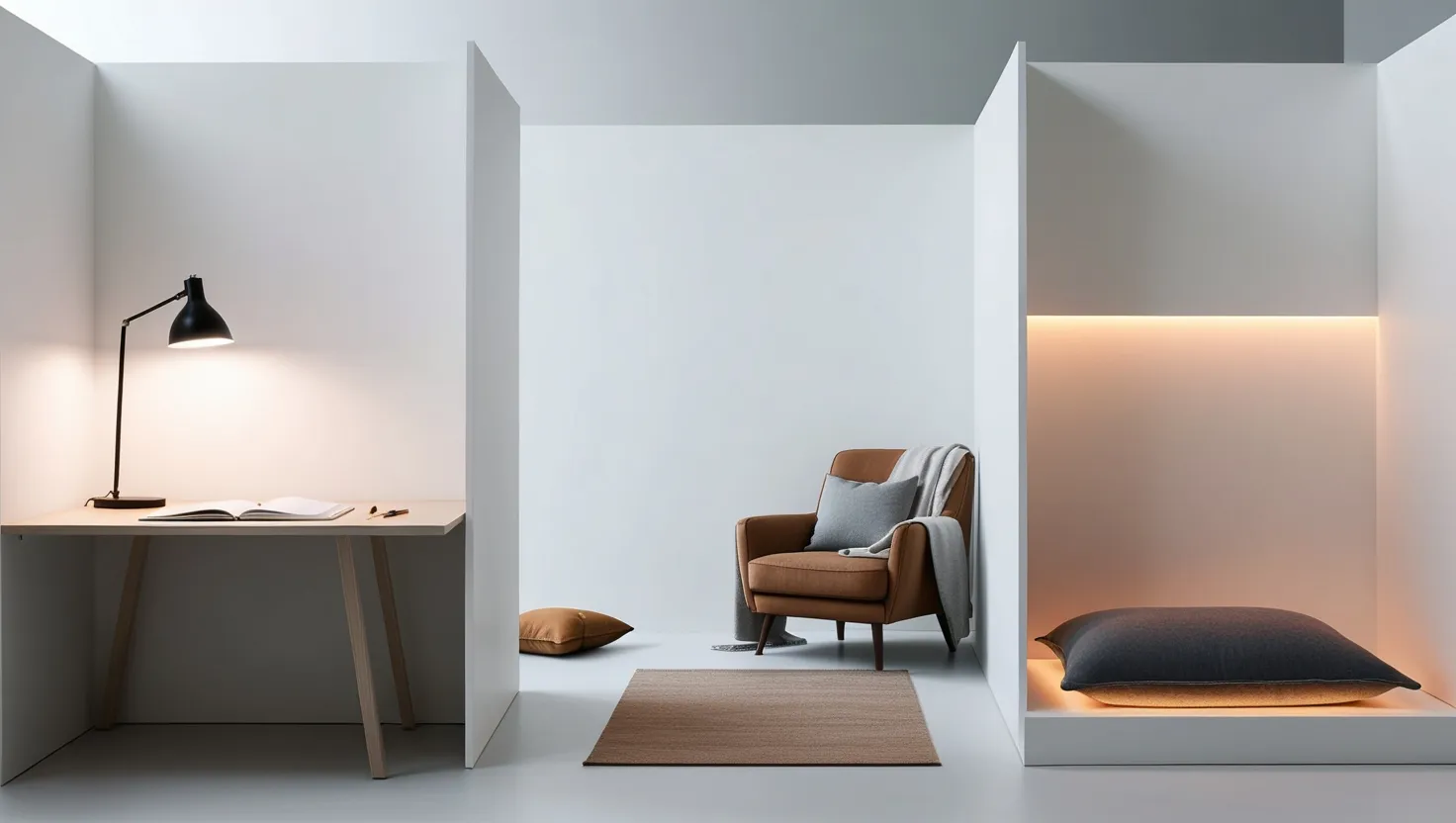
Now imagine a spot where everything is already open. A small desk with just a notebook, a pen, and a single lamp. No phone. No clutter. No extra tabs. That’s it. When you sit there, the only logical thing to do is write. There’s no decision fatigue. The environment has already made the decision for you.
Steve Jobs once said, “Design is not just what it looks like and feels like. Design is how it works.” That applies to spaces too. A good micro-environment doesn’t look fancy. It works well. It removes friction. It makes the right action the easiest action.
So ask yourself: what’s one thing you keep putting off? Writing? Planning your week? Learning something new? Paying bills? Meditating? Pick one. Then think: where in your home could you carve out a tiny zone just for that?
It doesn’t have to be big. A corner. A closet turned into a reading cave. A chair in a quiet spot. Even a mat on the floor. The size doesn’t matter. What matters is that it’s clearly different from the rest of the space. It has a boundary. A signal.
That boundary can be physical or sensory. A rug. A different light. A specific chair. A particular scent. These aren’t just decorations. They’re cues. Your brain learns: this light = focus. This chair = reading. This smell = deep work. Over time, just turning on that lamp or sitting in that chair starts to shift your mental state.
Here’s a less obvious trick: use sightlines to your advantage. Where you look matters more than you think. If your desk faces a busy hallway, your attention will keep getting pulled away. But if it faces a blank wall or a calm view, your brain feels safer to dive deep.
Same with distractions. If your phone is in the same space, it will win. Always. So design the zone so that the phone either can’t go in, or has no reason to be there. Maybe it stays in a drawer outside the zone. Or maybe the zone is so small and focused that there’s literally no room for it.
Another thing people overlook: sound. Background noise can make or break focus. But instead of fighting it, use it. Pick a specific type of sound for each zone. A particular playlist, white noise, or even silence. Over time, that sound becomes a trigger. You put on the headphones, play the same track, and your brain knows: it’s time to work.
Now, let’s talk about materials. If you want to draw, keep the sketchbook and pens right there. If you want to journal, keep the journal and a pen open. If you want to plan, keep a notebook and a simple template ready. The fewer steps between “I should do this” and “I’m doing this,” the more likely you are to actually do it.
Most people store things away. They think, “I’ll get it when I need it.” But that’s where the delay happens. That’s where motivation dies. In a micro-environment, everything is already out. Everything is ready. The only thing left is to show up.
Here’s a question: what’s one task that feels like a chore because of all the setup? What if you removed all the setup? What if the space did the prep work for you?
Now, let’s flip it. What about rest? We spend so much time trying to be productive, but we forget to design spaces for recovery. A micro-environment isn’t just for work. It can be for reading, for meditating, for doing nothing.
Imagine a chair with a soft blanket, a good book, and a warm light. No screens. No work stuff. Just that. When you sit there, your brain learns: this is where I slow down. This is where I disconnect.
Same with meditation. A mat. A cushion. Maybe a candle or a small plant. That’s it. No need for a whole room. Just a spot where the only thing that makes sense is to sit and breathe.
The key is consistency. Use the same spot for the same thing, over and over. That’s how the habit sticks. That’s how the environment starts to shape your behavior instead of the other way around.
Here’s a weird but true thing: even small changes in lighting can change how your brain works. Bright, cool light tends to wake you up and help with focus. Warm, dim light tells your brain it’s time to relax. So use different lights for different zones.
Want to write? Use a bright, focused lamp. Want to read before bed? Use a warm, soft light. Want to plan your week? Maybe a daylight bulb. The light becomes part of the cue system. It’s not just about seeing better. It’s about feeling the right way.
Now, what about open-plan spaces? Not everyone has separate rooms. That’s fine. You can still create zones. A rug defines a floor area. A room divider or a tall plant creates a visual barrier. A specific chair or desk marks a spot. Even a change in flooring—like going from carpet to tile—can act as a mental threshold.
The idea is to make the zone feel like its own little world. When you step into it, you’re stepping into a different mode. When you step out, you leave that mode behind.
That’s why transitions matter. A small ritual helps. Sitting in a certain chair. Turning on a specific lamp. Lighting a candle. Putting on headphones with a particular playlist. These aren’t just habits. They’re signals. They tell your brain: “We’re switching modes now.”
Ask yourself: what’s one transition that feels hard for you? From work to rest? From chaos to focus? From distraction to deep work? What small ritual could you attach to that shift?
Now, let’s talk about flexibility. Your needs change. Seasons change. Projects change. So your micro-environments don’t have to be permanent. A summer reading spot on the porch can become a winter project zone. A guest room can temporarily host a deep-work station. A corner can switch from creative work to planning, depending on the month.
The point isn’t to build perfect, unchangeable spaces. It’s to build spaces that serve you right now. And when they stop serving you, change them. Tear them down. Rebuild them. Keep them alive.
Here’s a less obvious insight: micro-environments can also protect you from yourself. We’re full of good intentions, but we’re also full of distractions. A well-designed zone acts like a guardrail. It keeps you on track, even when your willpower is low.
For example, if you struggle with social media, design a work zone where the phone can’t go. Or if you tend to overwork, design a rest zone that’s physically separate from your work zone. The space itself becomes a boundary.
Another thing people miss: micro-environments don’t have to be for serious stuff only. They can be for fun. A game corner. A music spot. A place just for doodling or daydreaming. Creativity needs space too. And it thrives when it has its own little home.
So ask: what’s one thing you enjoy but never seem to make time for? Could you give it its own tiny zone? A shelf for your hobby supplies? A chair for playing guitar? A small table for puzzles?
Now, let’s talk about maintenance. A micro-environment only works if it stays clean and clear. Clutter kills focus. So build in a tiny cleanup habit. Five minutes at the end of the session. Put things back. Wipe the surface. Reset the space.
That way, the next time you walk in, it’s ready. It’s inviting. It’s not a mess that makes you want to avoid it.
Here’s a question: what’s one zone in your life that’s always messy? What small change could make it easier to keep clean?
Finally, think about the bigger picture. When you have several of these micro-environments, your home starts to feel like a tool instead of just a place to live. Each zone handles a different part of your life. One for focus. One for rest. One for creativity. One for admin. One for learning.
Over time, you stop fighting your environment. You start working with it. You stop relying only on motivation. You start relying on design.
As Charles Duhigg wrote, “Habits are not destiny. But they are the invisible architecture of our daily lives.” Your micro-environments are part of that architecture. They shape your habits, your focus, your energy.
So don’t try to change everything at once. Start small. Pick one task. Design one tiny zone. Make it stupidly easy to do that one thing. Then see what happens.
What’s the one thing you’d like to make easier in your day? Could a five-minute redesign of a corner, a chair, or a shelf make it happen?
You don’t need a perfect home. You don’t need a fancy office. You just need a few well-placed spots that quietly pull you toward the life you want.